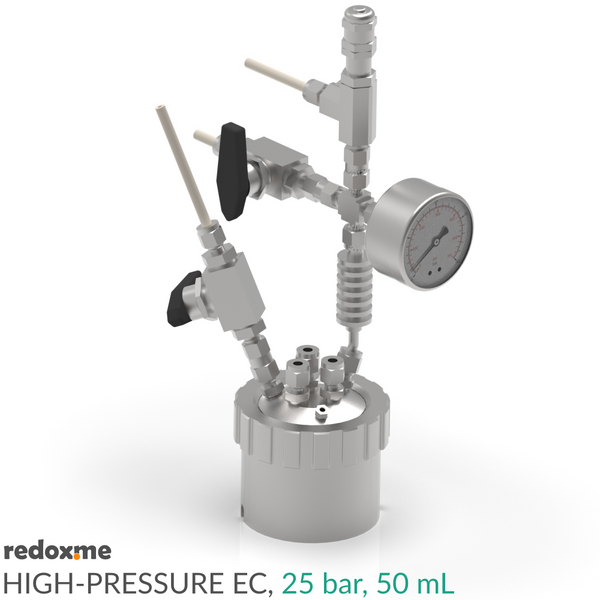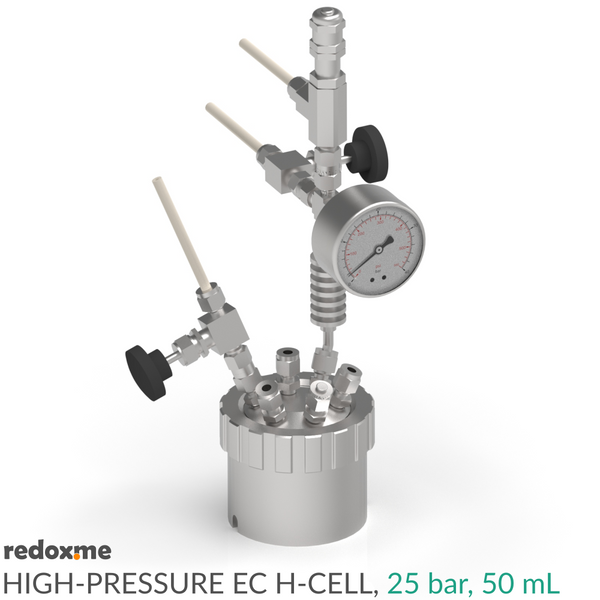
Pressurized Electrochemical H-Cell - 10 bar, 2x50 mL


The Pressurized H-Cell is designed for electrochemical experiments requiring physical separation of the working and counter electrode compartments under elevated pressure conditions. With two independent chambers connected through an ion-conducting separator, the cell enables studies of electrochemical reactions where product crossover must be minimized or eliminated. Each chamber has an internal volume of 50 mL and supports operation at pressures up to 10 bar, providing a versatile platform for research involving gases, dissolved reactants, and pressurized electrochemical systems.
The cell body and lids are manufactured from chemically resistant PEEK and sealed using O-rings and robust metal clamps (Stainless Steel 316L), ensuring reliable leak-tight operation. Both compartments are equipped with independent inlet and outlet ports for gas or liquid handling, as well as dedicated ports for temperature monitoring. Unused ports can be securely sealed using the supplied plugs.
The two chambers are separated by an ion-exchange membrane, porous separator, or other user-selected diaphragm, allowing ionic conductivity while preventing bulk mixing of electrolytes and reaction products. The cell is compatible with a wide range of electrochemical systems, including water electrolysis, CO₂ reduction, electrosynthesis, redox flow battery research, and catalyst evaluation.
Each compartment supports flexible electrode configurations, including both plate and disk electrodes. The design accommodates standard 2-electrode and 3-electrode arrangements, allowing independent placement of working, counter, and reference electrodes according to experimental requirements.
All fluid and electrical connections are based on Swagelok PFA fittings. Selected fittings are precision-modified to provide leak-tight integration of electrodes and temperature probes while maintaining pressure integrity.
By installing an optional 20 mm blanking insert in place of the membrane, the Pressurized H-Cell can be transformed into two completely independent Pressurized Basic EC Cells. Each compartment can operate as a standalone 2-electrode or 3-electrode cell, allowing parallel experiments, material screening, or independent electrochemical measurements using the same hardware platform. This unique modularity maximizes experimental flexibility while reducing equipment costs and laboratory footprint.
Working electrode holder or working electrode, counter electrode, reference electrode and membranes are not included and should be selected separately from the compatible accessories listed below. The cell is not intended for hydrothermal synthesis or reactions exceeding the specified pressure and temperature limits. Pressure must be supplied externally using an appropriate compressed gas system.
Customization options, including alternative chamber materials, membrane geometries, electrode holders, and port configurations, are available upon request.
Application note
The Pressurized H-Cell is designed for laboratory-scale electrochemical experiments that require physical separation of anodic and cathodic processes under controlled pressure conditions. Typical applications include:
1. Water electrolysis and hydrogen production, including evaluation of electrolyser components, catalysts, membranes, and operating conditions while preventing product crossover between electrode compartments.
2. CO₂ reduction (CO₂RR) and carbon conversion research, including studies requiring separation of cathodic reduction products from anodic reactions, with enhanced gas solubility under elevated pressure.
3. Electrocatalysis research, such as investigation of catalyst activity, selectivity, and long-term stability using flexible 2-electrode and 3-electrode configurations.
4. Redox flow battery and energy storage studies for characterization of membranes, electrolytes, and redox-active species in separated half-cell configurations.
5. Electrosynthesis and organic electrochemistry for electrochemical production of chemicals where isolation of reaction products and intermediates is essential.
6. Gas-evolving and gas-consuming reactions for studies involving H₂, O₂, CO₂, N₂, syngas, or other gases under precisely controlled pressure conditions.
7. Membrane and separator evaluation for testing ion-exchange membranes, porous separators, and diaphragms with respect to conductivity, selectivity, crossover, and chemical stability.
8. Fundamental electrochemical studies such as investigation of pressure effects on reaction kinetics, mass transport, gas-liquid equilibria, and electrode processes.
9. Material compatibility screening for assessment of electrode materials, catalysts, coatings, and electrolytes in demanding electrochemical environments.
Specification
maximum operating pressure: 10 bar
total volume: 100 mL (2x50 mL)
recommended volume of liquid: 30 - 35 mL in each compartmnet
maximum operating temperature: 200 ⁰C
port for temperature probe: 1/8 in. (3.175 mm)
electrode port diameter: 6 mm (1/4 in. possible on request)
number of electrode ports: 6
recommended tubing: 1/8 in. OD PEEK tube
Intrastat data
HS Code: 90309000
Country of Origin: Sweden
NET weight: 700g
Safety note
The use of a High-Pressure Electrochemical Cell involves working with equipment capable of withstanding elevated pressures and conducting experiments with potentially reactive chemicals. Ensuring safety during operation is paramount to prevent accidents and protect personnel and equipment. Below are key safety considerations to observe when using the High-Pressure Electrochemical Cell:
1. Prior to operation, all personnel involved should receive comprehensive training on the setup, operation, and safety protocols associated with the High-Pressure Electrochemical Cell. Only trained individuals familiar with the equipment should be permitted to operate it.
2. Adhere strictly to the specified pressure limitations of the High-Pressure Electrochemical Cell. Do not exceed the recommended pressure range to prevent over-pressurization, which could lead to equipment failure and potential hazards.
3. Ensure that all materials, including electrodes, seals, and electrolytes, are compatible with the pressure and chemical environment inside the cell. Incompatibilities could result in leaks, corrosion, or other safety hazards.
4. Verify that the pressure relief mechanism is in place and functioning correctly. This mechanism is crucial for safely releasing excess pressure in the event of over-pressurization.
5. Regularly inspect the seals and connections of the High-Pressure Electrochemical Cell for signs of wear, damage, or leaks. Replace any compromised components promptly to maintain sealing integrity and prevent pressure-related accidents.
6. Establish clear emergency procedures, including evacuation routes and protocols for handling pressure-related incidents. Ensure that all personnel are aware of these procedures and know how to respond effectively in case of emergencies.
7. Wear appropriate Personal Protective Equipment (PPE), including safety glasses, gloves, and lab coats, when operating the High Pressure Electrochemical Cell. Additional PPE may be necessary depending on the specific experimental conditions and hazards involved.
8. Supervise experiments closely and monitor the High-Pressure Electrochemical Cell continuously during operation. Respond promptly to any abnormalities or unexpected changes in pressure or performance.
By adhering to these safety guidelines and exercising caution and diligence, users can minimize risks and ensure the safe and effective operation of the High-Pressure Electrochemical Cell in the laboratory. Always prioritize safety to protect yourself, your colleagues, and the integrity of the experimental setup.
Product includes
2 x PEEK chamber
2 x PEEK lid
4 x Stainless Steel 316L clamp
2 x Stainless Steel 316L cell coupling bracket
1 x set of Stainless Steel screws and nuts
6 x electrode fitting, modified Swagelok PFA 6 mm OD x 1/8 in. Male NPT
4 x tube fitting, Swagelok PFA 1/8 in. OD x 1/8 in. Male NPT
2 x T-probe fitting, modified Swagelok PFA 3 mm OD x 1/8 in. Male NPT
2 x Swagelok PFA plug for tube size 1/8 in. OD (if T probe not used)
4 x Swagelok PFA plug for tube size 6 mm OD (for 2-electrode setup)
2 x O-ring, FKM
1 x PTFE tape
Related products
High-pressure working electrode
High-pressure counter electrode
High-pressure reference electrode
High-pressure basic sample holder